

What is systemic abuse? And what are the MCC boards going to do to “untangle” this “spaghetti”?
In this excerpt from the transcript of the facilitated discussions with MCC board members, parties discuss the definition of “systemic abuse.”
Anicka and John define systemic abuse as the combined effect of harmful individuals, enabling culture, and organizational policies that together perpetuate and shield wrongdoing. Systemic abuse occurs when misuse of power is embedded across an organization’s structures, culture, and leadership. It involves individuals who misuse power with evil intent, both active and passive enablers who look away or follow harmful norms, and policies or practices that centralize authority and discourage accountability. When abuse appears at senior levels and every attempt to report it is blocked across multiple departments, the system itself becomes complicit, creating a web that protects abusers, silences whistleblowers, and makes participation in the system’s dysfunction feel almost unavoidable.
The board members receive this definition with openness and appreciation, express their plan to take this definition back to their boards, and state clearly that they do not think everything is fine within MCC. They commit to working to “untangle” the systemic issues that John and Anicka named.

Closing statements in facilitated conversations between MCC board members and John Clarke and Anicka Fast
The last half hour of the final session of facilitated conversations (March 2, 2026) was devoted to closing statements. These are shared here in the order in which they were made.

Zero response: Anger and dismissiveness at MCC US Board meetings
It was with incredible dismay that I read a report received by MAST about how the matter of these letters was handled at the October board meetings in Akron. We heard that the board members were intensely angry that their email addresses had been made available to the letter writers. We heard that they were very tired of this topic and wanted it to go away. We heard that Executive Director Ann Graber Hershberger downplayed the large number of stories by saying that most had happened a long time ago. We heard that some expressed anger about all the money that is being taken away from the good work MCC is doing and being spent on this issue. We heard that the board members were told not to engage with MAST. We heard that a MAST member was prayed for, to be delivered from her trauma. We even heard that the disruption caused by these letters, and by MAST, was referred to as the devil’s work.
What we heard sounds like a huge group temper tantrum.
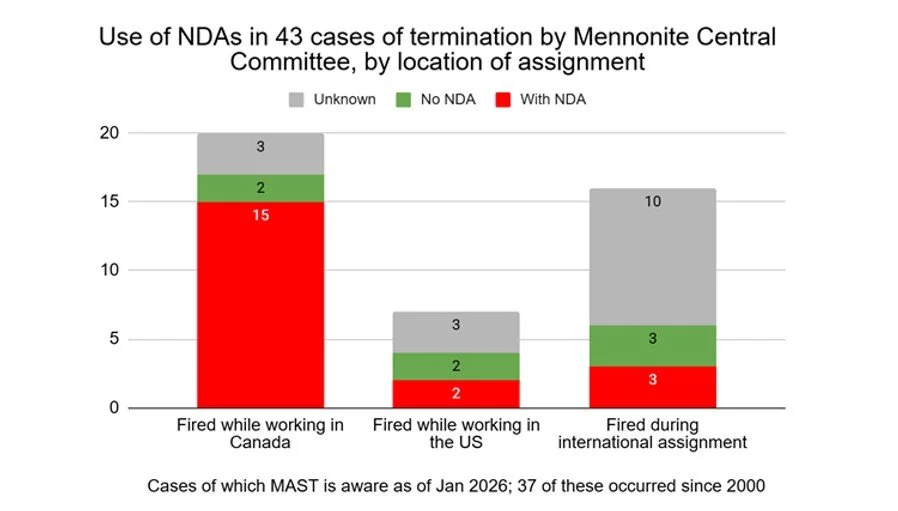
A ‘Handful’ or a Pattern? Data shows widespread NDA use by MCC
MCC leaders insist that nondisclosure agreements are used only “a handful of times,” mainly to protect workers in volatile regions. But an analysis of 83 cases documented by MAST tells a very different story. NDAs appear far more frequently, applied mostly in Canada and the US—not war zones—and never as mutual protections. Our data show that NDAs function as tools of silence rather than safety. With dozens of leaders implicated and many stories still hidden, the pattern is unmistakable. MAST’s analysis exposes a systemic practice that demands transparency, accountability, and urgent external review.


Proposed revisions to MCC whistleblowing policy will cement power of HR and further muzzle those with complaints
The bottom line seems to be something like this: “If you see anything that seems to be wrong, you must report it, but only to us, and we won’t tell anyone, including you, or even MCC leaders, what we will do with your report. If you report concerns in any other way, you will be in violation of policy and could be fired.” HR Directors will know everything, and no one else will know anything.
How is this “having our theology, alternative dispute resolution processes and restorative justice principles help inform policies, procedures and organizational culture as we care for the people who serve with us”?
